
Green juice, and the vitamin I don’t hide
My six-year-old used to eat everything.
Raw tomatoes. Plain avocado. Chili. Whatever was on our plates, he wanted some of it. He ate the way you hope a kid eats and I had no idea it was a phase.
Then, somewhere around two, he stopped.
Not all at once, and not completely — but the list of things he would eat got shorter and stayed short. He’s a lot better now. He still won’t eat a vegetable.
So I did the obvious thing. I bought him a multivitamin.
He spat it out. Every time, and sometimes he threw up afterward. I tried more than one kind — and gummy vitamins were out anyway, because our dentist told us to avoid them. The vitamin was never going to stay in a kid who could tell it was there.
If your child won’t eat vegetables and won’t take a vitamin either, you are not out of options. You’re just out of the obvious ones — it took me years to find out that unflavored vitamins for picky eaters are an entire category, and that somebody had already solved the part I was stuck on.
Here’s what we actually do, what it costs, and the parts of it I’d want somebody to tell me honestly.
The juice was already in the fridge
Here’s the part I want to be accurate about, because it would be easy to tell this like I planned it.
I didn’t. I drank green juice. I’d been drinking it for years, for me, for no reason more complicated than that it was easier than eating a salad.
When my six-year-old got old enough to have juice, I started giving him some. Not as a strategy — just because it was there, and because I figured a little extra couldn’t hurt.
Then he stopped eating, and the vitamins wouldn’t stay down, and I looked in my refrigerator one day and realized the thing I’d been giving him casually had quietly become the only vegetables in his day.
It wasn’t a plan. It was a thing I was already doing that turned out to matter.
The second time was a different problem
My four-year-old never had a “before.”
He’s had eating issues from the start. I feel it stemmed from a dairy protein allergy that caused a lot of health issues when he started on real food around six months — we were doing baby-led weaning, and it did not go the way it goes in the pictures.
He ended up with a feeding therapist who was also an occupational therapist. The OT company we were already working with is the one who recommended her, and she came to us through early intervention, the same as everyone else on his team.
That part is worth knowing on its own. I didn’t go looking for a feeding therapist and I wouldn’t have known how. The people already working with him found her. If you’ve got a team, ask them — they know who else is out there and you don’t.
So: two kids, two completely different routes into the same place. One ate well and stopped. One never started. And the thing that ended up working was the same thing for both of them, which I didn’t expect and still find a little funny.
He started on green juice as soon as he was old enough to have it, same as his brother.
What I actually buy
I’m not going to name the two I buy, and that’s deliberate — brands get reformulated and discontinued, and half of you can’t get mine anyway. What I can give you is what I check for, which works on whatever is on your shelf.
They’re both easy to find near me. That’s the first reason and it’s the real one. A perfect juice I have to order online is a juice I will eventually stop buying.
Neither has added sugar. That’s the first line I check — not a brand name, not a claim on the front, just whether there’s any sugar in here that didn’t come out of the produce.
Then I check the total, and that’s the one that picked my main bottle for me. It had the least fruit of anything I could find that my kids would still drink, and fruit is where the sugar in a green juice comes from. The bottles that taste best are usually the ones with the most of it.
Both of them are SNAP eligible, which I’m mentioning because nobody ever mentions it.
And one I didn’t know to look for until recently: check that it’s pasteurized. Plenty of cold-pressed juice isn’t, and the FDA requires untreated juice to carry a warning that names kids specifically — that it “may contain harmful bacteria that can cause serious illness in children, the elderly, and persons with weakened immune systems.” If a bottle carries that warning, put it back. It isn’t for a four-year-old. Mine says “gently pasteurized” right on the label and I’d never once looked.
Turn the bottle around and read the first three words
I’d been reading the nutrition panel on these for years. What I had never once done was read the ingredient list underneath it, in order — and that is the thing I only worked out while writing this. I think it’s the most useful thing on this page.
Ingredients on a food label are listed heaviest first. That isn’t a convention, it’s federal rule — the exact wording is “descending order of predominance by weight.” Whatever is printed first is the biggest thing in the bottle.
So I went and actually read both of my bottles.
The one with the greenest name — and I mean the name is practically shouting about greens at you from across the aisle — starts: apple, mango, banana. Then cucumber. Then lemon. Kale is sixth. Spinach is seventh.
It is a fruit smoothie with greens in it. I have been buying it for years. I’d have told you it was a vegetable drink, because that is exactly what the front of a bottle is designed to make you think.
In fairness to it, that one is our backup. I buy it when the other is out of stock, which happens. And it still has less sugar than most of the green juices a kid will actually drink, with no added sugar at all. It isn’t a bad bottle. It just isn’t the bottle the name says it is.
The plainer-looking one goes: cucumber, kale, spinach — and apple doesn’t turn up until fourth.
Two different stores, similar price. Both organic, both no added sugar. Two completely different products.
I haven’t stopped buying the fruity one, and I’m not telling you to. When I’ve got both open I mix them, and whatever is left of each goes into the next day’s cup. But I know what it is now, and knowing meant I stopped counting it as the vegetables in their day.
Turn the bottle around. Read the first three words. That’s the entire skill. It takes four seconds, it works on every green juice in every store, and it tells you more than anything printed on the front ever will.
The honest part about juice
Here’s where I have to be careful, because this is the point where a post like this usually oversells.
The vegetable one lists what went into each bottle: a couple of cucumbers, twenty kale leaves, sixteen spinach leaves, most of an apple. That sounds enormous, and it is. But that’s what went in, not what comes out.
Except here I had it wrong, and I’d rather correct it than quietly fix it. I assumed the fiber was gone — that’s what pressing does to most juice, and I’d have told you so with a straight face.
I only went looking after this post was written, after a conversation with my son’s GI doctor. It says nine grams. Thirty-two percent of a day’s worth, with seven grams of protein next to it. I had been reading that panel for the sugar line for years and walked straight past the rest of it.
That still does not make it the same as eating the vegetable. The American Academy of Pediatrics puts it plainly — juice “offers no nutritional benefits over whole fruit.” It is a supplement to vegetables, not a replacement for them. I’d rather my six-year-old still ate raw tomatoes. He doesn’t. This is what we do instead, not what we do because it’s better.
The AAP also publishes actual limits, and they’re lower than most people assume:
- Under one year: no juice at all.
- Ages one to three: at most four ounces a day.
- Ages four to six: at most four to six ounces.
- Ages seven and up: eight ounces.
That guidance is written about fruit juice, which — now that I’ve read my own labels — covers one of my two bottles pretty squarely. The vegetable-first one is a bit further from what the AAP was describing. I’d rather give you the nearest real number and tell you where it doesn’t quite fit than pretend there’s a perfect one.
In my house, the two boys share one bottle a day between them. Not one each. I’m saying that out loud because the bottles on the shelf hold more than a small child’s entire daily allowance, and if I didn’t, somebody would hand their four-year-old a whole one and believe they were doing what I do.
Work yours out against your own kid’s age. And if your pediatrician says something different from a number on the internet, your pediatrician wins. They’ve met your child.
The vitamin a feeding therapist told me about
For a long time, the green juice was the vitamin. It was what I had.
Then the feeding therapist working with my four-year-old told me about EllaOla, which makes unflavored vitamins for picky eaters — a colorless powder in a single-serve sachet. You stir it into something. It doesn’t taste like anything. It doesn’t change the color of what you put it in.
I stir it into the green juice.
That’s the whole system. The juice that was already happening, with the vitamin in it, in one cup, once.
I want to be clear where that recommendation came from: a clinician who had been in my house working with my child told me about it. I didn’t find it in an ad and I didn’t find it on a list. That’s the only reason I tried it, and it’s the reason I’m comfortable telling you about it.
It is not cheap, and I’m going to be specific about that because the website won’t be.
We’re on the multivitamin-and-iron bundle, on a monthly subscription — they’re cheaper bundled than bought separately, which is why we’re on it. It’s $79 a month, plus shipping and tax.
The price you’ll see on their site is lower than that. There’s a discount that applies to your first order, and the number it shows you is not the number that comes out of your account in month two. I’d rather you knew what the second month looks like before you sign up for the first one.
That’s a real line in our budget. I understand completely if it isn’t one in yours, and nothing in this post stops working without it — the juice was doing this job on its own for a long time before the powder showed up.
A note on which box, because they make several and the ages aren’t interchangeable: the regular multivitamin starts at four years old, and there’s a separate toddler version for ages one to three. The iron is labeled for a wider range than the multivitamin is. Read the front of the box rather than the name of the bundle.
Iron is the one I’d ask about first
This is the part of the post I’d most want you to read, and it’s the part a product page won’t tell you.
The version we take includes iron. Iron is not a general-purpose vitamin you add because more is better. It’s normally given because a blood test said a child needed it.
The FDA requires this warning on iron supplements, and I’m quoting it exactly:
Accidental overdose of iron-containing products is a leading cause of fatal poisoning in children under 6.
That requirement is written for tablets and capsules, so a powder in a sachet may not carry it. The rule is narrow. The reason behind it isn’t. My four-year-old is inside that age band.
So: a feeding therapist told me about these, my pediatrician knows my kids take them, and iron is the one thing in this entire post I would not start on a stranger’s say-so — including mine. Ask yours. It’s one question at an appointment you already have.
The box says it’s easy to hide. I don’t hide it
The marketing for this stuff leans hard on one word. Easy to hide. Undetectable. Your picky eater won’t even know.
I understand why. For a lot of exhausted parents that’s the entire selling point, and I’m not going to pretend I don’t benefit from the fact that it’s tasteless — I obviously do. It’s the reason it works.
But I don’t hide it.
I pour it into the juice in front of them. I have no intention of keeping it from them. Both of my boys are nonverbal, one is four and one is six, and I don’t think either of them registers what I’m doing or particularly cares. That isn’t the point. The point is that if they ever do look up and ask — in whatever way they ask — the answer has always been there to find, because I never set it up as a secret.
It costs me nothing to stir it in where they can see. And the day it becomes a thing I do when they’re not looking is the day it becomes a thing to find out about. Food is already hard in this house. I’m not adding anything to the pile that has to stay hidden to work.
If you make a different call, I’m not going to tell you you’re wrong. I’d just rather not start somewhere I’d have to back out of later.
When juice is not the answer
I have to say this plainly, because the internet is full of people who won’t.
If your child’s eating is genuinely restricted — a shrinking list of safe foods, losing weight, distress at the table, missing whole food groups — that is not a juice problem. That’s a conversation with your pediatrician, and possibly a referral to a feeding therapist.
There’s a recognized feeding disorder called ARFID that overlaps a lot with how selective eating shows up in autistic kids, and it is diagnosable and treatable by people who do it for a living. Juice does not treat it. Nothing on this page treats it.
My four-year-old had a feeding therapist. Our pediatricians, our therapists and his teachers have all had a hand in his eating, and the juice is something they’re glad he drinks — not something that replaced any of them. That’s the honest ordering and I don’t want to blur it.
I’m not a dietitian and I’m not a doctor, and nothing on this page is medical advice. I’m a parent who found something that works in my house.
What it is and what it isn’t
Let me put it as plainly as I can, because I think the honest version is more useful than the enthusiastic one.
It is not: a cure for picky eating. A treatment for anything. A reason to stop offering vegetables — we still put them on the plate, every time, and one day one of them might eat one. A substitute for a feeding therapist. Anything to do with autism itself, and I want to be especially clear about that one, because the internet is full of people selling things to autism parents with a promise attached. This doesn’t do anything for autism. It’s a drink with vegetables in it.
It is: a way for two kids who won’t eat vegetables to get some anyway, and a way for a vitamin to actually stay down in a kid who could taste every other one I tried.
That’s a smaller claim than most things you’ll read. It’s also true, which most of them aren’t.
What I’d say to you
If you’ve got a kid who won’t eat a vegetable and spits out every vitamin you’ve bought, you probably feel like you’re failing at something very basic.
You’re not. Some kids can taste what the rest of us can’t, and no amount of trying harder changes that. The answer isn’t a better chart or more willpower. It’s finding a different door.
Ours happened to be a bottle I was already buying for myself.
Yours might be something else entirely. But check the sugar on the label, ask your pediatrician about the iron, and don’t let anybody sell you a thing that promises more than vegetables in a cup.
What’s the one thing your kid will reliably eat or drink? I’m always looking for ideas.
Hit reply on any of my emails. I read them all.
Want the visual schedule pack?
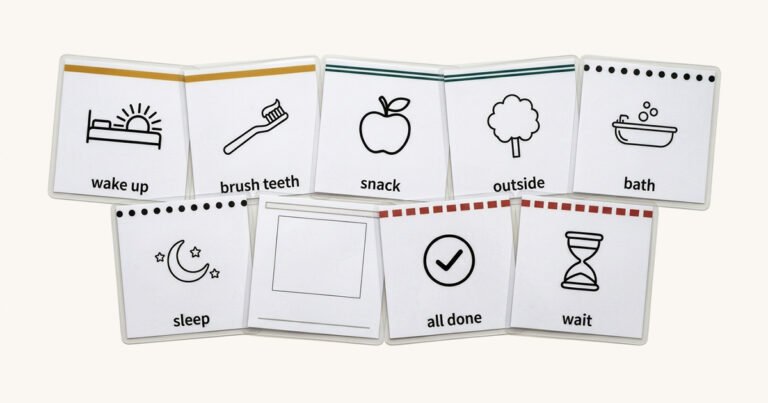
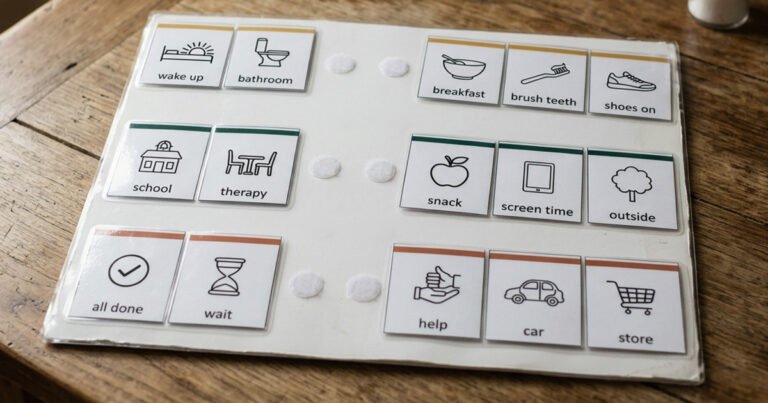
Twenty-four routine cards, six blanks, and two ready-to-use routines. Free, and honest about what to expect when it doesn’t work the first week.